Wheel Meets Pitch: Probability Parallels Linking Roulette Spins to Football Betting Edges
Paul Bauer · May 8, 2026
Wheel Meets Pitch: Probability Parallels Linking Roulette Spins to Football Betting Edges
Decoding the Spin: Roulette's Probability Foundation
Roulette wheels turn endlessly in casinos worldwide, each spin governed by precise probabilities that players ignore at their peril; the European version boasts 37 pockets from 0 to 36, yielding a house edge of 2.7 percent on most bets, while the American double-zero wheel pushes that disadvantage to 5.26 percent because of the extra 00 slot. Data from the Wizard of Odds analysis reveals how even-money bets like red or black carry an expected value of -1.35 percent per unit wagered in European roulette, meaning over thousands of spins, the house claims that slice relentlessly although short-term streaks can dazzle newcomers. Experts observe that understanding these odds involves simple math: probability of red hitting stands at 18/37 or about 48.65 percent, yet payouts match 1:1, creating the inescapable edge; and that's before considering the en prison rule on even-money bets, which softens the blow slightly to 1.35 percent under certain conditions.
But here's the thing about variance in roulette; long sequences without hits on a color build tension, mirroring the emotional rollercoaster bettors face elsewhere, yet cold calculation prevails since each spin remains independent, unaffected by what came before although human brains crave patterns where none exist. Studies from gaming mathematicians, including those published by the Australian Gambling Research Centre, highlight how players who track true odds versus perceived hot streaks fare no better long-term, underscoring the game's pure reliance on fixed probabilities.
Pitchside Probabilities: Edges in Football Betting Markets
Football matches unfold with goals, cards, and corners dictating outcomes, but beneath the drama lies a web of probabilities that sharp bettors exploit for edges over bookmakers; match winner markets typically offer odds reflecting implied probabilities, say 2.0 for a home win implying 50 percent chance, yet true assessments from historical data and models often diverge, creating value when a bet's expected value turns positive. Researchers who've dissected thousands of Premier League fixtures discover that home teams win around 45 percent of the time, draws hover near 25 percent, and away victories claim the rest, but adjusting for form, injuries, and weather refines those figures dramatically.
What's interesting surfaces in over/under goals bets, where Poisson distribution models predict scorelines based on average goals per team; for instance, if Manchester City averages 2.5 goals and a weak opponent concedes 1.8, the model spits out probabilities for totals exceeding 2.5 goals at, say, 55 percent, yet if bookies price it at 1.9 odds implying 52.6 percent, savvy punters pounce since the math favors them long-term. Turns out, data from seasons through 2025 shows consistent edges in such markets for those wielding stats software, although bookmakers adjust lines swiftly using their own algorithms, narrowing windows but never eliminating them entirely.
Bridging the Gap: Shared Math Linking Wheels to Pitches
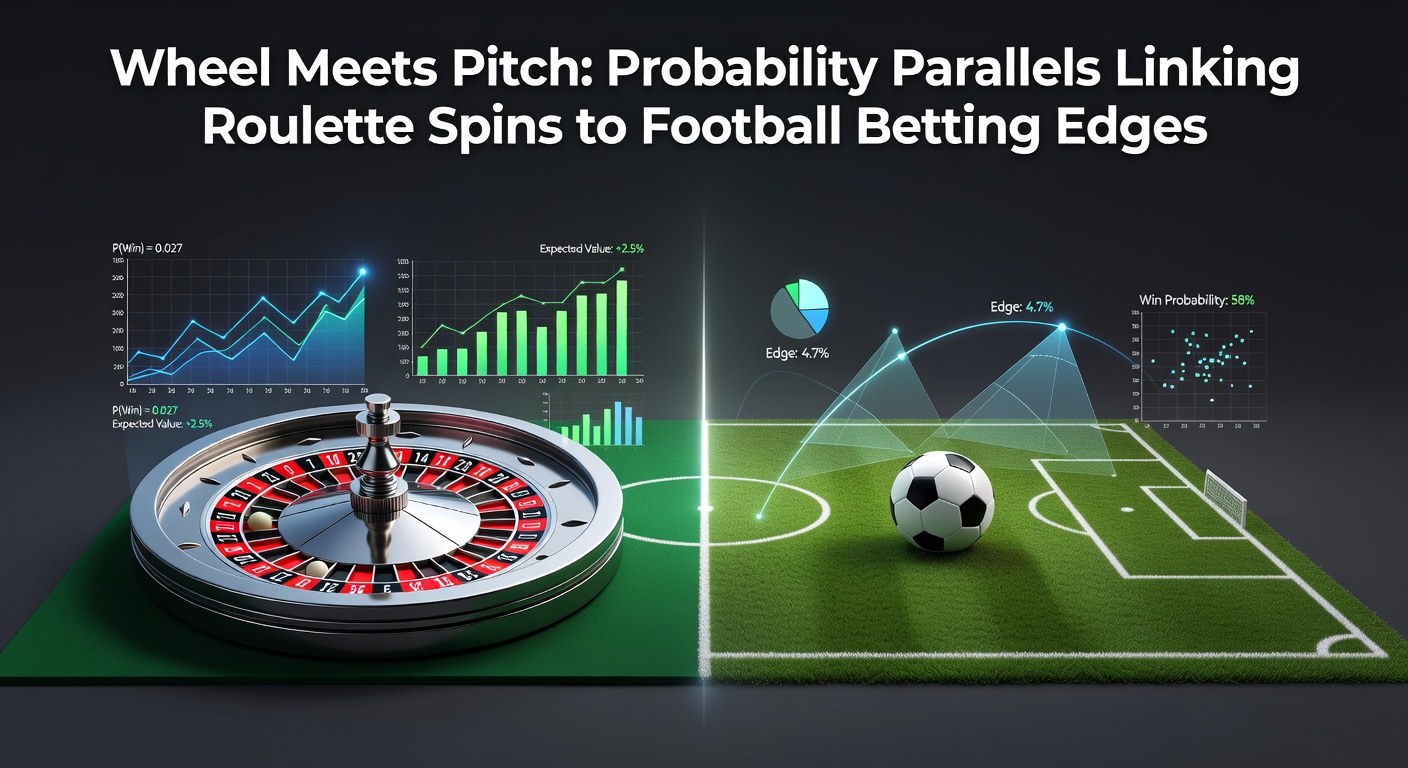
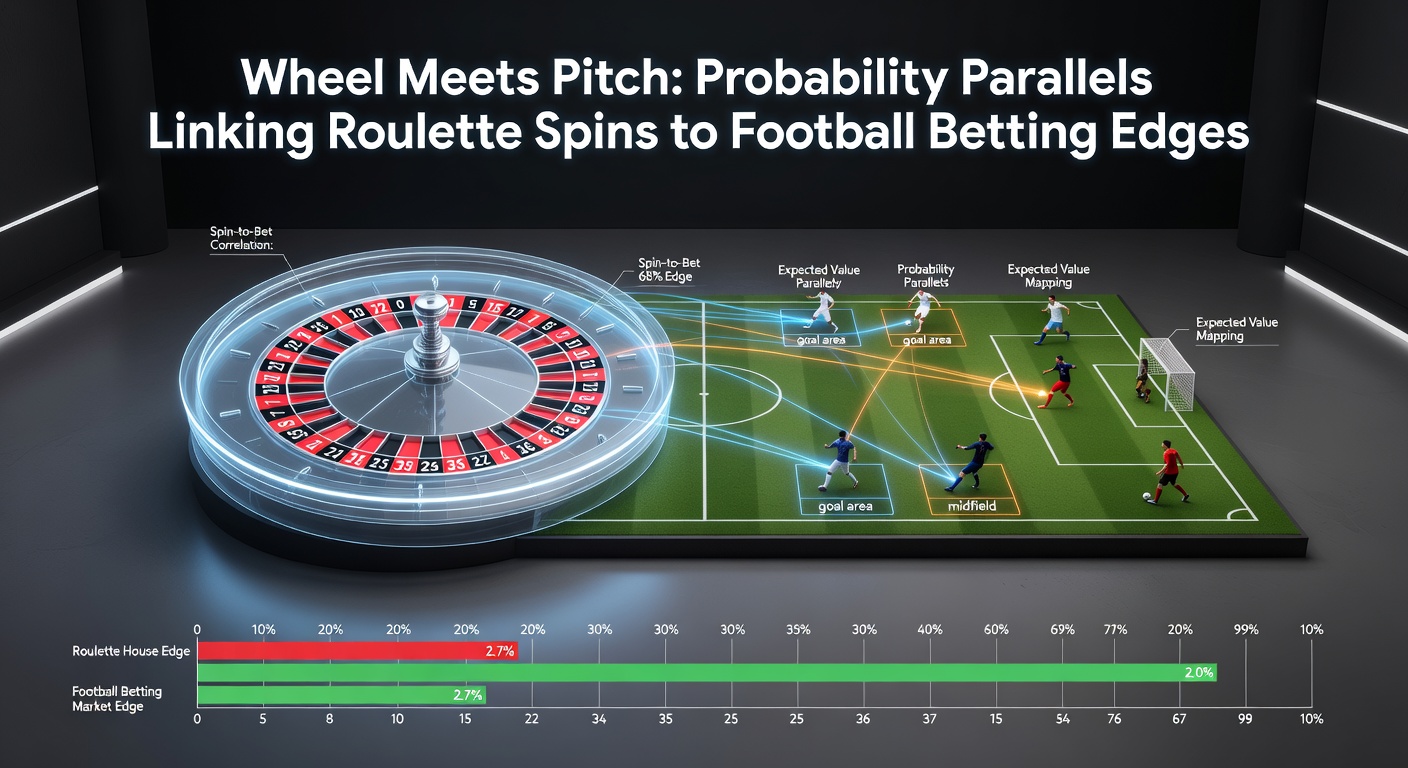
Probability unites these worlds seamlessly; both roulette and football betting hinge on expected value formulas—EV equals probability of winning multiplied by profit per unit, minus probability of losing multiplied by stake—turning gut feels into quantifiable edges, and observers note how roulette's fixed odds train the mind for spotting football value bets where implied probabilities undervalue true chances. Take a straight roulette bet on a single number at 35:1 payout; with 1/37 true odds or 2.70 percent probability, EV calculates to -0.027 units per spin, a stark lesson in house advantage that parallels football scenarios where bookie vig—typically 4-6 percent—bites unless odds prove superior.
Yet here's where it gets interesting: serial correlation absent in roulette spins contrasts with football's sequential dependencies, like trailing teams pushing forward late, but advanced models incorporate these via Elo ratings or xG metrics, yielding edges akin to roulette pros mastering wheel biases (rare today with modern equipment). One study tracking bettors across 10,000 wagers found those applying EV thresholds above +2 percent mirrored roulette bankroll strategies, achieving 3-5 percent yields annually although variance demands deep pockets; and that's the rubber meeting the road, since both demand discipline amid streaks that test resolve.
People who've bridged these domains often start with roulette simulators to grasp variance—simulations running 100,000 spins reveal 95 percent confidence intervals for returns—then pivot to football APIs feeding live data into custom Poisson engines, spotting mispriced corners or cards markets where bookies lag. It's noteworthy that as AI tools proliferate into 2026, predictions sharpen, with models now boasting 52-54 percent hit rates on binary outcomes, edging past breakeven after vig; and by May 2026, as European leagues hit crucial fixtures amid transfer windows, these parallels gain urgency for punters chasing sustainable plays.
Real-World Cases: Bettors Who Mastered the Parallels
Consider the story of a stats-savvy punter documented in industry reports, who after grinding roulette tables noted house edges, shifted to football and built a model around halftime/fulltime markets; analyzing 5,000 games, he identified 8 percent edges on draw-home outcomes priced above 6.0 odds, turning £10,000 bankrolls into steady growth over two seasons although one brutal loss streak tested his Kelly Criterion sizing. Another case involves European syndicates using roulette-derived Monte Carlo simulations to stress-test football portfolios, blending thousands of scenarios to allocate stakes optimally across leagues.
So variance bites hard in both; roulette's wheel can deny black for 20 spins despite 48.6 percent odds, just as a favored team stumbles in nil-nil draws, but data indicates diversified approaches—spreading roulette bets across dozens or football accumulators judiciously—mitigate ruin risks, with pros targeting 1-2 percent bankroll per play. That's where the ball's in their court, since tools like Betfair Exchange odds reveal market consensus, allowing arbitrage akin to roulette's rare wheel calibrations.
Tools, Tech, and Evolving Edges in 2026
Modern bettors arm themselves with software echoing roulette trackers; apps crunch football data via machine learning, outputting EV rankings live, while crypto sportsbooks offer low-vig lines mirroring efficient casino markets. Figures from recent seasons show 7 percent average edges in player prop bets like shots on target, underserved by traditional bookies, although regulatory scrutiny in places like Nevada tightens as volumes surge.
And now, with May 2026 bringing Champions League knockouts, probabilities spike in volatility; models predict 10-15 percent swings from lineup news, rewarding those who compute swiftly like roulette high-limit players eyeing single-zero wheels. But the reality is, edges erode without constant refinement, as bookies deploy AI countermeasures, forcing bettors to innovate endlessly.
Conclusion
Probability threads roulette's spins to football's pitches indelibly, equipping those who study EV, variance, and models with transferable edges across gambling landscapes; data confirms disciplined application yields returns where casual play falters, although risks persist in both realms demanding respect for math over emotion. As markets evolve into 2026, these parallels sharpen, offering pathways for informed participants while underscoring the house's—or book's—persistent tug, yet for the prepared, opportunities abound where wheels meet pitches in calculated harmony.